Skip to content
One Day·Safari DEEN from $200
Red elephants heading to a waterhole on the wide Tsavo East plain – view in Tsavo East National Park

07:30 · Bachuma Gate

Tsavo East: 13,747 square kilometres and red elephants at the water.

Kenya's largest national park begins 110 kilometres beyond Mombasa. What entry costs in 2026, which gate the day trips use, where the animals gather and what you cannot fit into a single day.

2:45 hDrive time one way1ReservesnoBig FiveriskMalaria 152reviews Checked on 2 October 2026

AI-generated illustrative image

07:30 · Gate

Tsavo East: The essentials in 30 seconds

At around 13,747 km², Tsavo East is Kenya's largest national park according to the Kenya Wildlife Service (KWS), and together with Tsavo West it forms a protected area of roughly 22,000 km². Day trips from the coast only cover the southern section: in at the Bachuma Gate, a game drive past the Kanderi Swamp to the Aruba Dam, lunch at a lodge and out through the Voi Gate. Mudanda Rock can be added as a detour; Lugard Falls, the Yatta Plateau and the north are out of reach in a single day.

Bachuma Gate is 110 km, Voi Gate 156 km and Manyani Gate 191 km from Mombasa, all on the Mombasa to Nairobi road (KWS); in practice 2.5 to 3 hours to Bachuma. From Diani, operators allow 2.5 to 4 hours. Voi Gate is around 335 km from Nairobi, Sala Gate around 130 km from Malindi.

Drive time
Bachuma Gate is 110 km, Voi Gate 156 km and Manyani Gate 191 km from Mombasa, all on the Mombasa to Nairobi road (KWS); in practice 2.5 to 3 hours to Bachuma. From Diani, operators allow 2.5 to 4 hours. Voi Gate is around 335 km from Nairobi, Sala Gate around 130 km from Malindi.
Big Five
Elephant, lion, buffalo and leopard all live in the park. For black rhino, the national wildlife census counted 31 animals in Tsavo East National Park at the end of 2024, against 142 in the fenced Ngulia sanctuary in Tsavo West. On a day trip in the southern section, seeing all of the Big Five is therefore practically out of the question.
Malaria
The German Federal Foreign Office classes the whole of Kenya below 2,500 m as an area with a high malaria risk all year round, which covers the coast as well as Tsavo East. It considers tablet prophylaxis advisable there in addition to mosquito protection (as of 2 October 2026).
Price
Conservation Fee adults non-resident, per day (max. 24 hours): 80 USD
Best time
The best time is the long dry season from June to October: according to the climate table, Voi gets only 5 to 15 mm of rain a month from June to September, daytime highs sit at 28 to 30 °C, and the animals crowd around the Aruba Dam, the Kanderi Swamp and the waterhole below Mudanda Rock. November and December are the wettest months with 105 and 120 mm, and April brings around 100 mm; the murram tracks can then be wet or impassable, though the savannah turns green.
01

Tsavo East National Park

National park · 13,747 km² · 2 h 45 min · 110 km

Flat, semi-arid savannah of red laterite, thorn scrub and scattered acacias, crossed by the Voi River and the Galana. In the south the wildlife concentrates at a handful of water sources: the Kanderi Swamp, the Aruba Dam on the Voi River, built in 1952, and the waterhole beneath Mudanda Rock. The open plains let you spot elephant herds, zebras and oryx from far off, which is the main difference from the hilly, more densely wooded Tsavo West.

Honestly: The park covers almost 14,000 km², and day visitors see a narrow strip of it between Bachuma and Voi. In the midday heat many animals retreat into the shade; lions are a matter of luck, rhinos and leopards the exception. Lugard Falls are rapids rather than a waterfall and lie away from the usual day-trip route between Bachuma and Voi.

Big Five
no
Malaria
risk
Wildlife
Elephant (17,266 across the whole Tsavo ecosystem in the 2024/25 census, red from the laterite dust), Lion (males often maneless), Cape buffalo, Giraffe, Plains zebra, Oryx, Gerenuk, Lesser kudu, Cheetah, Leopard (rare), Hirola (85 in the Tsavo ecosystem), Black rhino (31 animals, rarely seen), Hippo and crocodile on the Galana and at the Aruba Dam, over 500 bird species.
Conservation Fee adults non-resident, per day
80 USD (2026-10-02)

Official website

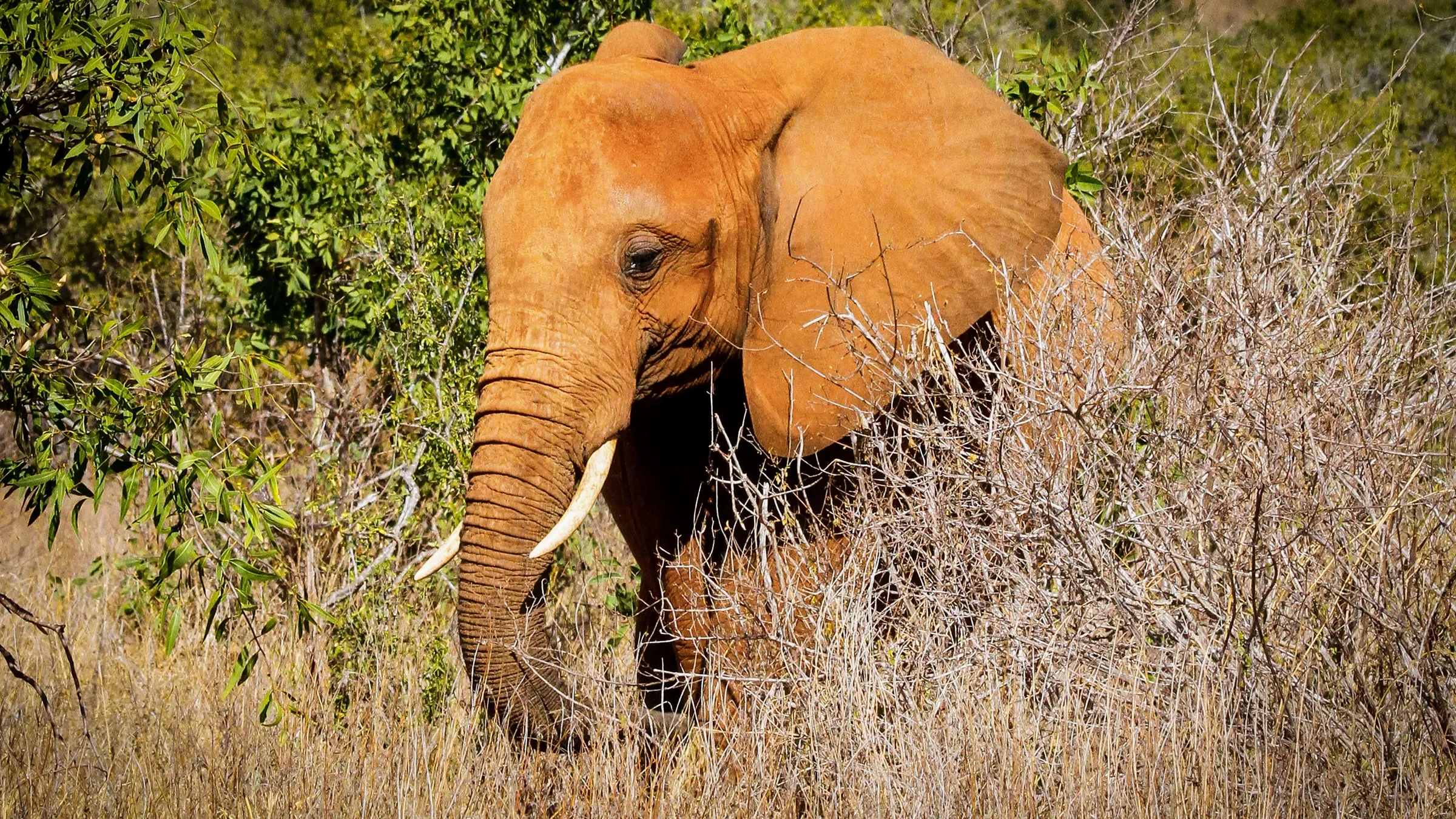
Red elephant in Tsavo East National Park, coloured by the dust – wildlife encounter in Tsavo East National Park

10:30 · Aruba Dam

Red dust, open plains.

Tsavo East's elephants take their colour from the red laterite soil. At the Kanderi Swamp and the Aruba Dam herds, buffalo, zebras and oryx come to drink, and the flat savannah shows them from far away. Lions are a matter of luck, rhinos the exception: 31 animals in the whole park.

KWS entry 80 USD, children 40 USD, 5 and under free. Gates 06:00 to 18:00.

Photo: joramr, Envato Elements

The whole day

Tsavo East · Itinerary: How it really goes.

  1. 04:30Pickup in Diani, from Mombasa around 05:00.
  2. 07:30Entry at the Bachuma Gate, fees paid in advance on eCitizen.
  3. 08:30Game drive through the Kanderi area, stop at the swamp.
  4. 10:30Aruba Dam on the Voi River, optional detour to Mudanda Rock.
  5. 13:00Lunch at a lodge overlooking a waterhole.
  6. 15:00Exit via the Voi Gate, hotel between 16:30 and 18:30.

Pickups start between 04:00 and 05:00 in Diani and on the south coast, and around 05:00 in Mombasa. Via the Dongo Kundu Bypass and the A109 the vehicle reaches the Bachuma Gate at about 07:30, where the guide shows the fees paid in advance on eCitizen together with the passports. The morning game drive follows the main track west through the Kanderi area, whose swamp holds water almost all year, to the Aruba Dam on the Voi River, where elephants, buffalo and water birds come to drink. Some operators add a detour to Mudanda Rock, around 40 km north of the Voi Gate. Lunch is at about 13:00 at a lodge inside the park, for instance Voi Safari Lodge, which overlooks a waterhole, or Ashnil Aruba Lodge. A shorter drive towards Voi follows, with the exit at the Voi Gate around 15:00 because the gates close at 18:00. Depending on the operator, guests are back at their hotel between 16:30 (Mombasa) and 18:30 (Diani); one operator quotes 19:00.

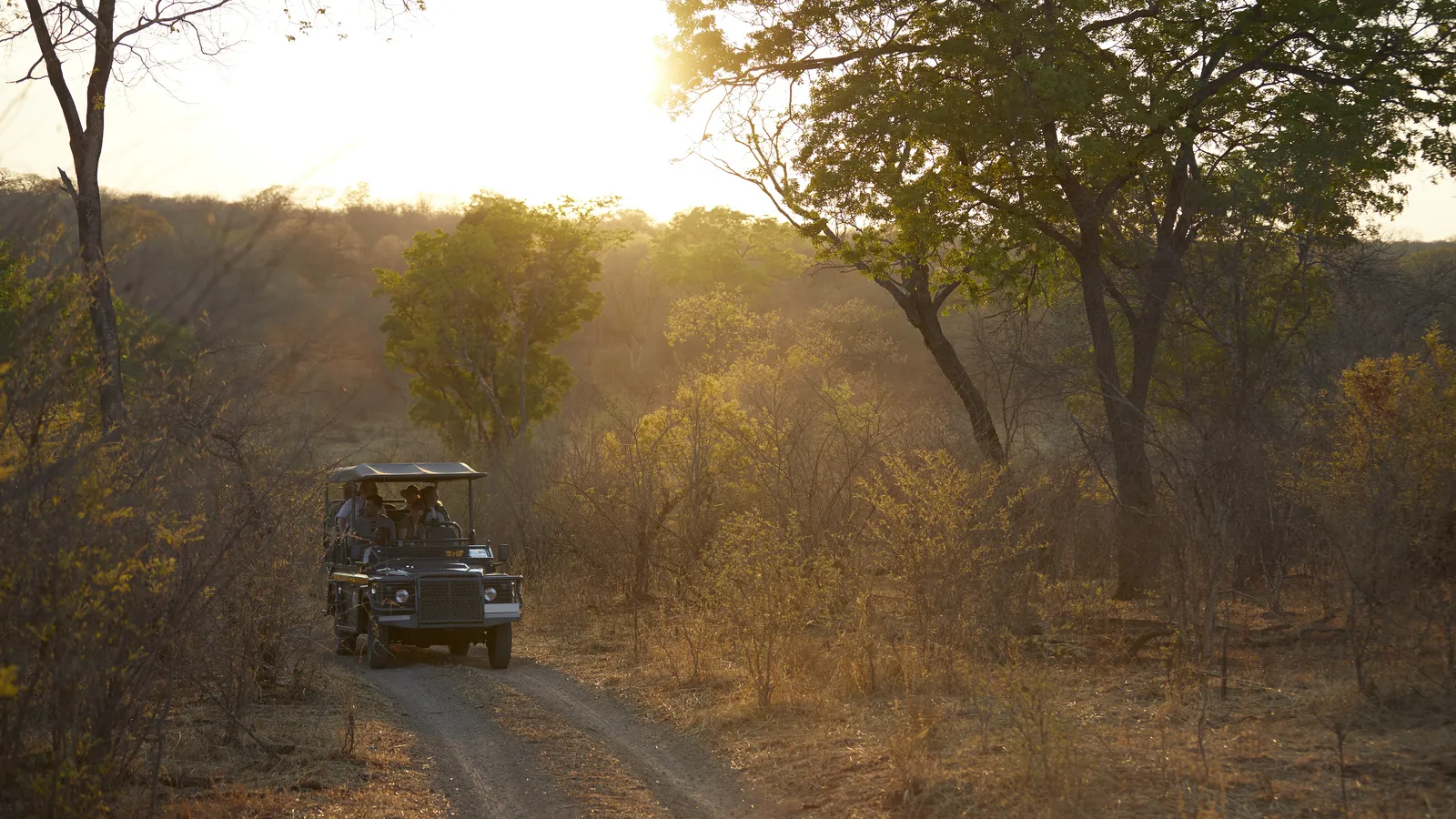
Open safari vehicle on a gravel track in the morning light – on the road in Tsavo East National Park
Photo: Image-Source, Envato Elements · Stock image

13:00 · Decide

Tsavo East · Day tours: The day tours people actually book.

Sorted by number of reviews, only tours with genuine reviews. Booking via GetYourGuide or Viator through affiliate links (advertising), same price as booking direct. Prices as of 2 October 2026, in US dollars.

Show all 14 tours

Official fees and prices

  • Conservation Fee adults non-resident, per day80 USD2026-10-02
  • Conservation Fee child/student non-resident, per day40 USD2026-10-02
  • Vehicle under 6 seats, per day600 KES2026-10-02
16 sourcesChecked on 2 October 2026No cookies, no trackingConservation Fee adults non-resident, per day (max. 24 hours): 80 USD
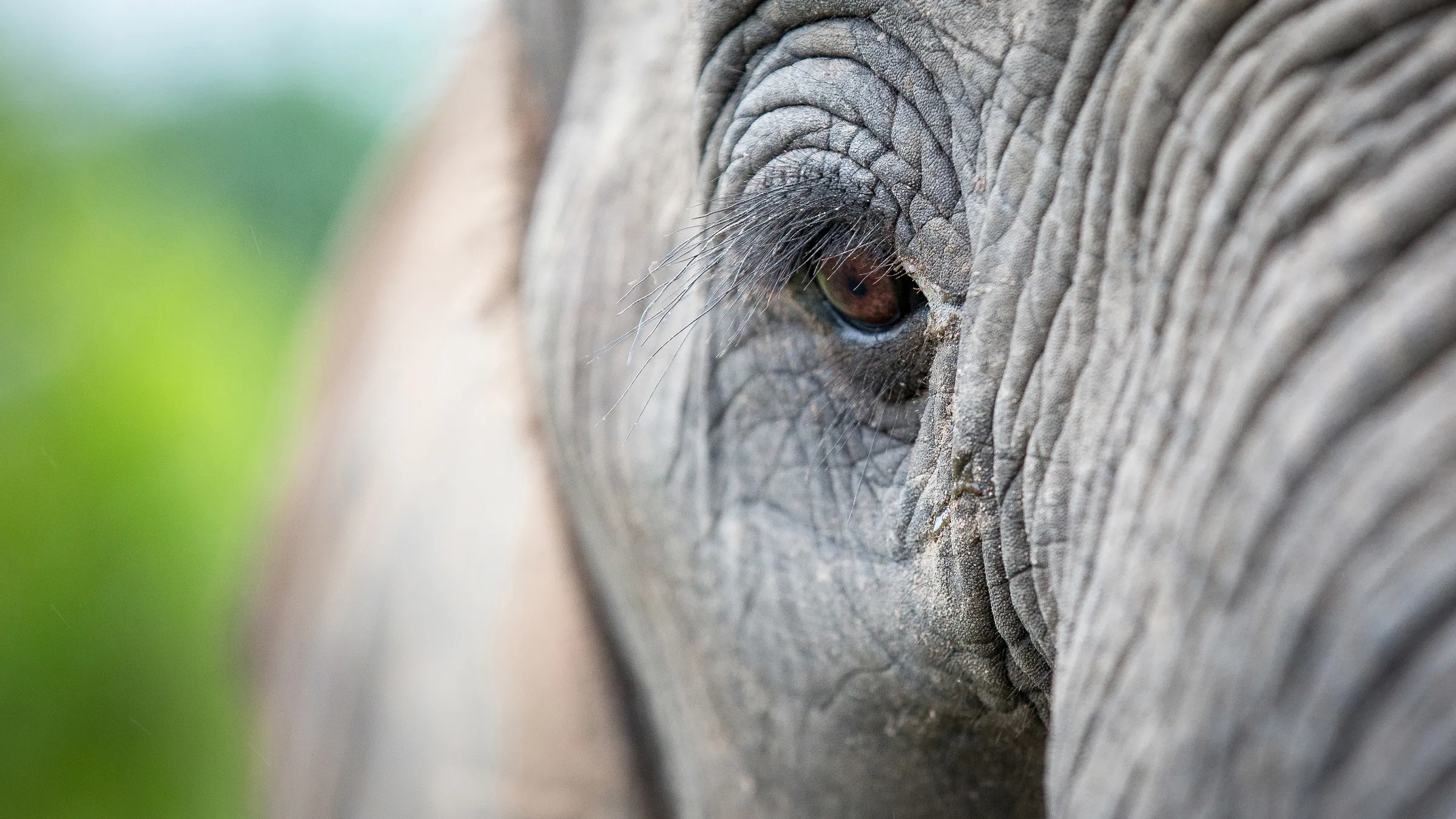
Close-up of an elephant's eye, long lashes, wrinkled skin – wildlife encounter in Tsavo East National Park

15:00 · Second look

Tsavo East: What the web gets wrong.

Tsavo's elephants are a separate red species

The colour comes from the iron-oxide-rich laterite soil the animals dust themselves with against sun and insects. According to the Tsavo Trust they are genetically no different from other savannah elephants (tsavotrust.org).

Lugard Falls is a big waterfall

Wikipedia describes it as white-water rapids on the Athi-Galana-Sabaki River. It lies on the Galana away from the Bachuma to Voi route and does not appear in the day-trip itineraries from the coast that we reviewed.

There are no rhinos in Tsavo East

The national wildlife census counted 31 black rhinos in Tsavo East National Park at the end of 2024. They are rarely seen; the large population of 142 animals lives in the Ngulia sanctuary in Tsavo West (WRTI census 2025).

Tsavo's elephants are in decline

The 2024/25 census counted 17,266 elephants in the Tsavo ecosystem, up from 14,964 in 2021. According to the report the population has been growing since 1987, after two decades of heavy poaching and drought.

You can always see Kilimanjaro from the park

For Tsavo West, Wikipedia says the mountain is frequently visible on a clear day. For the southern section of Tsavo East, where day trips run, there is no reliable evidence; do not count on it there.

You can pay the entry fee in cash at the gate

KWS collects the Conservation Fee through KWSPay on eCitizen; day-trip operators pay it in advance and show the receipt at the gate.

Tsavo East is just a drive-through park without highlights

KWS lists the Aruba Dam, Mudanda Rock, Lugard Falls, the Yatta Plateau and the maneless lions as attractions in their own right, along with over 500 bird species and the critically endangered hirola antelope (kws.go.ke).

Photo: Mint_Images, Envato Elements

15:00 · Voi Gate

Tsavo East · Entrance fee 2026: What it costs.

According to KWS, the Conservation Fee for Tsavo East is 80 USD per adult and 40 USD per child or student (non-resident) and is valid for a maximum of 24 hours; children aged 5 and under are exempt under the fee regulations. On top comes 600 KES per day for a vehicle under 6 seats or 1,500 KES for 6 to 12 seats. Payment is made in advance through KWSPay on eCitizen.

Booked day trips with a 4x4, guide, park fee, lunch and pickup cost between 167 USD per person (seven or more people) and 470 USD for a solo traveller with the operators reviewed; one operator quotes from 190 USD. If you stay overnight and add Tsavo West and Amboseli, KWS sells a Tsavo East, Tsavo West and Amboseli package for 215 USD. A tip for the driver-guide is not included in any of the offers.

Official fees and prices

  • Conservation Fee adults non-resident, per day (max. 24 hours)80 USDAs of 2026-10-02
  • Conservation Fee child (from 5 to under 18) or student, non-resident, per day40 USDAs of 2026-10-02
  • Conservation Fee African citizen adult / child40 USD / 20 USDAs of 2026-10-02
  • Conservation Fee Kenya resident adult / child1,350 KES / 675 KESAs of 2026-10-02
  • Conservation Fee East African citizen adult / child1,000 KES / 500 KESAs of 2026-10-02
  • Vehicle under 6 seats / 6 to 12 seats, per day600 KES / 1,500 KESAs of 2026-10-02
  • Tsavo East, Tsavo West and Amboseli package, adults non-resident215 USDAs of 2026-10-02
  • Organised group walking safari (max. 10 people), per person per day, plus entry fee50 USDAs of 2026-10-02
All 9 prices
  • Night game drive in selected parks, per person, plus entry fee50 USDAs of 2026-10-02
Safari vehicle in the savanna under the evening sky – on the road in Tsavo East National Park
15:00 · Back through the evening lightPhoto: ADDICTIVE_STOCK, Envato Elements · Stock image

Best time to go

Tsavo East · Best time to visit: When it is worth it.

The best time is the long dry season from June to October: according to the climate table, Voi gets only 5 to 15 mm of rain a month from June to September, daytime highs sit at 28 to 30 °C, and the animals crowd around the Aruba Dam, the Kanderi Swamp and the waterhole below Mudanda Rock. November and December are the wettest months with 105 and 120 mm, and April brings around 100 mm; the murram tracks can then be wet or impassable, though the savannah turns green. January to March are the hottest months, with daytime highs of up to 33.6 °C.

Over the year Voi receives only around 555 mm of rain. Within the day, the first hour after entering and the late afternoon belong to the active animals; the lunch break at the lodge falls in the hottest hours.

Who you might meet

Elephant (17LionCape buffaloLeopardBlack rhino (31 animals266 across the whole Tsavo ecosystem in the 2024/25 censusred from the laterite dust)GiraffePlains zebraOryxGerenukLesser kuduCheetahHirolararely seen)Hippo and crocodile on the Galana and at the Aruba Damover 500 bird species.

Elephant, lion, buffalo and leopard all live in the park. For black rhino, the national wildlife census counted 31 animals in Tsavo East National Park at the end of 2024, against 142 in the fenced Ngulia sanctuary in Tsavo West. On a day trip in the southern section, seeing all of the Big Five is therefore practically out of the question.

The German Federal Foreign Office classes the whole of Kenya below 2,500 m as an area with a high malaria risk all year round, which covers the coast as well as Tsavo East. It considers tablet prophylaxis advisable there in addition to mosquito protection (as of 2 October 2026).

Who is it for?

With children

Under the KWS fee regulations, children aged 5 and under pay no entry fee; older children up to 17 pay 40 USD. One operator takes under-3s free and charges 75 per cent for ages 3 to 12. With a 04:00 or 05:00 start and a day of up to 13 hours, the trip suits school-age children best. The lunch stop at a lodge with a waterhole breaks up the long day in the vehicle.

Malaria

High malaria risk all year below 2,500 m according to the German Federal Foreign Office, which includes Tsavo East. Discuss prophylaxis with a travel clinic before you go; wear long clothing and repellent at dawn and dusk, when you set off and return.

Self-drive

Possible in a 4x4. Route descriptions say the tracks are mostly murram (gravel) and partly impassable in the rains. Pay the fees in advance through KWSPay on eCitizen; gates open 06:00 to 18:00, speed limit 40 km/h, keep at least 20 m from animals, no off-road driving, and only get out at designated spots. Coming from Nairobi, KWS notes you can also take the SGR train to Voi and start a safari there.

Limited mobility

The game drive takes place entirely in the vehicle; climbing into a high 4x4 needs some agility. The lodges have toilets and seating. The climb up Mudanda Rock is a short walk, but over uneven rock.

What to wear

Light clothing in khaki or beige that forgives the red dust, a scarf for mouth and nose when the pop-up roof is open, sun hat, sunglasses and sunscreen. A light jacket for the pre-dawn departure. KWS also recommends drinking water, insect repellent and a first aid kit.

What to wear? Read the safari clothing guide →

Photography

The open plains make for wide shots of herds against red earth; at the Aruba Dam and the Kanderi Swamp the animals stand by the water. A telephoto lens of 200 mm or more and binoculars are worthwhile because the minimum distance is 20 m. Light is soft in the morning and afternoon, while at midday the air shimmers over the savannah. Commercial filming carries separate KWS fees.

Budget

Group tours with six or more passengers are cheapest at around 167 to 200 USD per person including the park fee. A private trip for two costs around 247 to 310 USD per person, and up to 470 USD on your own. Driving yourself saves little once you add the 80 USD fee, 600 KES for the vehicle and a 4x4 hire.

Tips for the day

  1. 01Ask before booking whether the tour enters at Bachuma and leaves via Voi. That way the drive across the park becomes the game drive, rather than covering the same track twice.
  2. 02Ask for a stop at the Kanderi Swamp and a longer pause at the Aruba Dam; in the south these are the most dependable water sources.
  3. 03If you want to see Mudanda Rock, arrange it in advance; it lies around 40 km north of the Voi Gate, and in the dry season large groups of elephants often drink at the waterhole below it.
  4. 04Treat the fee as a day ticket: KWS says it is valid for a maximum of 24 hours. If you stay overnight in the park, it is charged again for the second day.
  5. 05Choose a lodge with a waterhole for lunch, such as Voi Safari Lodge, so the wildlife watching carries on through the hottest hours.
  6. 06Bring cash for tips but not for the entry fee: KWS only takes payment in advance through eCitizen, and the payment receipt is shown at the gate.
  7. 07Leave single-use plastic at the hotel; according to the fee regulations, all KWS parks are plastic-free zones.
  8. 08If you want to see both Tsavo East and West, book at least two days; the A109 separates the two parks, and Tsavo West is too far for a day trip from the coast.

18:00 · Back

Tsavo East: Frequently asked questions.

How much does it cost to visit Tsavo East National Park in 2026?

According to KWS, non-residents pay 80 USD per adult and 40 USD per child (5 to under 18) or student, per day and for a maximum of 24 hours. Children aged 5 and under are exempt. On top comes 600 KES per vehicle under 6 seats. Payment is made in advance through KWSPay on eCitizen; on booked tours the fee is usually included in the price.

Which is better for safari, Tsavo East or Tsavo West?

Tsavo East is flat and open, so animals are visible from a long way off, and from the coast it is the only Tsavo park that works as a day trip. Tsavo West is hillier and greener, with the Mzima Springs and the Ngulia rhino sanctuary, but its gate lies 250 km from Mombasa. For a single day from the beach, choose Tsavo East; for two or three days, combine both parks.

Can you see the Big Five in Tsavo East?

All five live in the park, but not all are realistic on a day trip. Elephants and buffalo are the norm, lions a stroke of luck, leopards rare. For black rhino, the census counted only 31 animals in the whole park at the end of 2024, so sightings are the exception.

Can you see Kilimanjaro from Tsavo?

From Tsavo West, frequently on clear days, according to Wikipedia. In the southern section of Tsavo East between Bachuma, Aruba and Voi, where day trips run, the sources we reviewed give no reliable evidence that the mountain is visible. If Kilimanjaro is on your list, plan Tsavo West or Amboseli with an overnight stay.

How much is a Tsavo East day trip from Mombasa or Diani?

The operators we reviewed charge between 167 USD per person for seven or more passengers and 470 USD for a solo traveller, each including a 4x4, guide, park fee, lunch and pickup. For two people, prices run at around 247 to 310 USD per person. Tips are extra.

What is the best time to visit Tsavo National Park?

June to October, in the long dry season. Voi gets only 5 to 15 mm of rain a month from June to September, and the animals gather at the Aruba Dam, the Kanderi Swamp and Mudanda Rock. In the wetter months of April, November and December some tracks turn muddy, but the landscape is green.

How far is Tsavo National Park from Nairobi?

The Voi Gate of Tsavo East is around 335 km from Nairobi on the Mombasa road; the Mtito Andei Gate of Tsavo West is 233 km from Nairobi according to KWS. KWS also points to the SGR train from Nairobi to Voi. That is too far for a day trip, so from Nairobi Tsavo East is usually booked with at least one night.

Which gate do you use to enter Tsavo East?

From Mombasa and Diani, the Bachuma Gate, 110 km from Mombasa. From Nairobi or by train, the Voi Gate (156 km from Mombasa); from Malindi and Watamu, the Sala Gate. Many day trips enter at Bachuma and leave by the Voi Gate. The gates open at 06:00 and close at 18:00.

Why are the elephants in Tsavo red?

They dust themselves with the red laterite soil, which is coloured by iron oxides. The dust protects their skin from sun and insects. They are not a separate species; according to the 2024/25 census, around 17,266 elephants live in the Tsavo ecosystem.

Is a day trip enough, or should you stay overnight?

A day is enough for the red elephants, the Aruba Dam and the Kanderi Swamp, but it costs 5 to 8 hours on the road. Staying at a lodge inside the park gives you late-afternoon and early-morning drives, when predators are active, and time for Mudanda Rock or Lugard Falls. Bear in mind that the park fee is then charged for each day.