Safari from JohannesburgTwo and a half hours to the crater, Kruger only with effort.
Johannesburg is the best starting point for a Big Five day safari without malaria: Pilanesberg is two and a half hours away. The Kruger National Park is a twelve-hour day from Johannesburg. What is worth it, and for what.
2:30 hDrive time one way5ReservesyesBig FivefreeMalaria1,692reviewsChecked on 23 September 2026
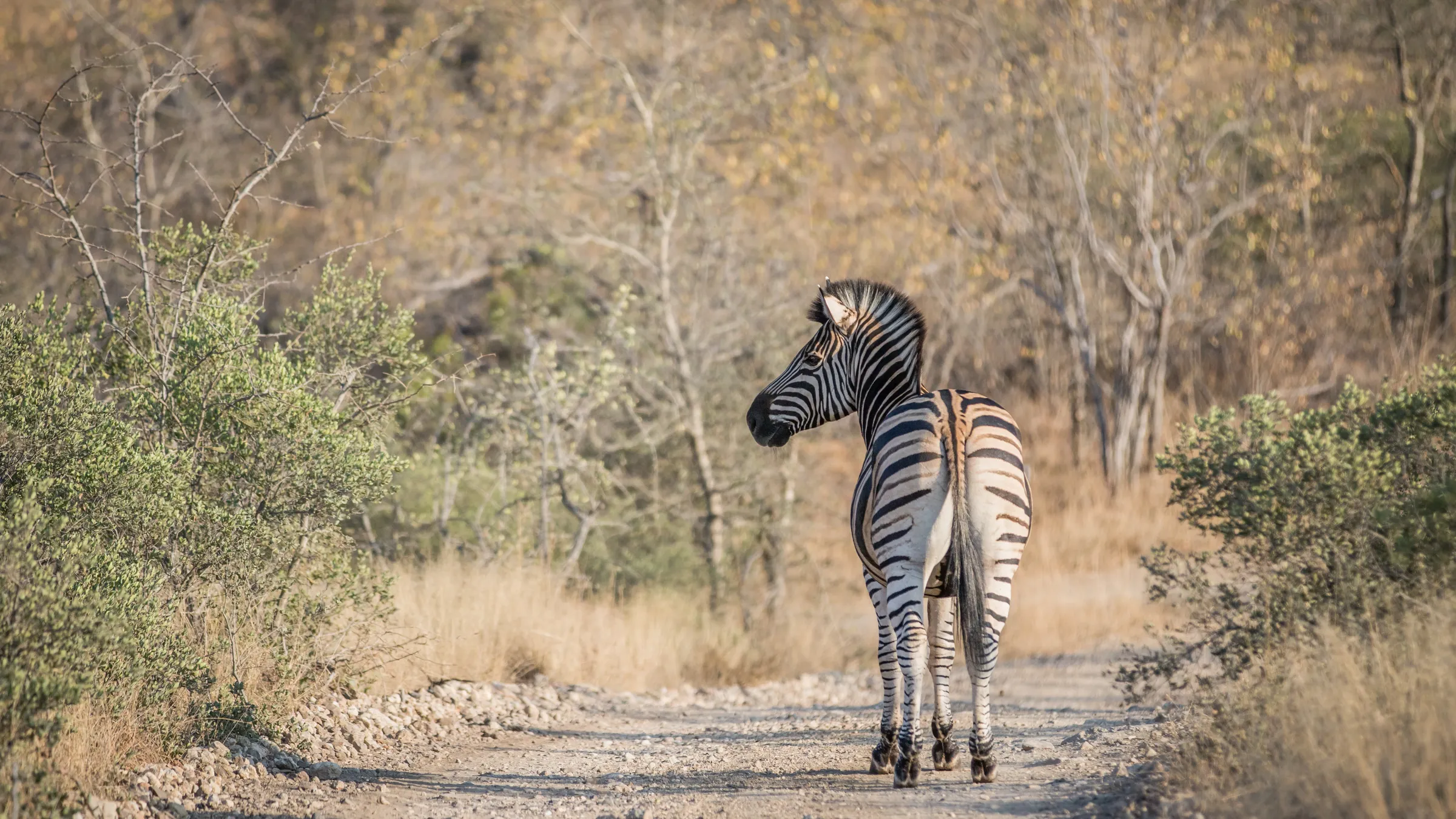
Photo: wirestock, Envato Elements
06:00 · Options
Five reserves, one day.
From Johannesburg and Pretoria, Pilanesberg National Park is the only Big Five day safari that works without malaria prophylaxis and with a reasonable drive time: around 170 to 180 kilometres, two to two and a half hours each way. The Kruger National Park is almost 400 kilometres away and is only possible in a day as a very long excursion of more than twelve hours. Closer to the city are the Dinokeng Game Reserve north of Pretoria with the Big Five, the small Rietvlei Nature Reserve with rhinos, and the Lion & Safari Park, which is a wildlife park with predator enclosures and not a safari.
Pilanesberg 170 km and a good 2 hours from Johannesburg, 150 km and 1.5 hours from Pretoria, with city traffic more like 2.5 hours. Kruger's southern gate Malelane 392 km and 4 hours 21 minutes of pure driving time, Numbi similar. Dinokeng about 1 hour from Johannesburg, 45 minutes from Pretoria. Lion & Safari Park 48 km and around 42 minutes from Johannesburg. Rietvlei lies on the southern edge of Pretoria.
Drive time
Pilanesberg 170 km and a good 2 hours from Johannesburg, 150 km and 1.5 hours from Pretoria, with city traffic more like 2.5 hours. Kruger's southern gate Malelane 392 km and 4 hours 21 minutes of pure driving time, Numbi similar. Dinokeng about 1 hour from Johannesburg, 45 minutes from Pretoria. Lion & Safari Park 48 km and around 42 minutes from Johannesburg. Rietvlei lies on the southern edge of Pretoria.
Big Five
According to the North West Parks Board, Pilanesberg has healthy populations of lion, leopard, black and white rhino, elephant and buffalo. Dinokeng describes itself as the only Big Five reserve in Gauteng and lists lion, elephant, buffalo, leopard as well as black and white rhino. The Kruger National Park has all of the Big Five but is a malaria area.
Malaria
Johannesburg, Pretoria, Pilanesberg and Dinokeng are malaria-free; the current South African risk map shows Gauteng and most of North West province as malaria-free. The Kruger National Park, by contrast, lies in an area with a high seasonal malaria risk from September to May according to the German Federal Foreign Office.
Price
Pilanesberg entry adults, foreign visitors, per day: 748 ZAR
Best time
The best time for wildlife sightings in Pilanesberg is the dry season from May to September: the vegetation is sparse, the animals gather at the remaining waterholes, and the sky is mostly clear. The nights and early mornings are cold then; in June and July the minimums are close to freezing, which you notice on a drive in an open vehicle.
Drive time one way from the city, without hotel pickup. Figures from operators and park authorities.
Pilanesberg lies in the crater of an extinct volcano around 1.25 billion years old and, at about 550 square kilometres, is the fourth-largest park in South Africa. It is fenced, has around 200 kilometres of roads, several of them tarred, and is managed by the North West Parks and Tourism Board. For day visitors from Johannesburg and Pretoria it is the standard destination, for self-drivers and tour vehicles alike.
Honestly: The park is not an extensive wilderness area like the Kruger, but fenced, well visited at weekends and on public holidays, and within sight of Sun City. Leopard, cheetah and black rhino are only seen irregularly, and lions by no means on every game drive. Since 1 December 2025, foreign visitors pay 748 ZAR per person per day, more than in the Kruger National Park.
Big Five
yes
Malaria
free
Wildlife
Lion, Leopard (rarely seen), Elephant, White and black rhino, Buffalo, Cheetah (rare), Giraffe, Zebra, Hippo, Blue wildebeest, Kudu, Sable antelope, Oryx, over 300 bird species
Entry adults, foreign visitors (per day, incl. 10% community levy)
Kruger National Park (southern gates Malelane and Numbi)
National park · 19,623 km² · 4 h 21 min · 392 km
The Kruger is South Africa's largest and most wildlife-rich park, but from Johannesburg it is not a day trip in the usual sense. To the Malelane Gate it is 392 kilometres and around 4 hours 20 minutes of pure driving time, to the Numbi Gate similarly far. If you do that in one day, you sit nine hours in the car or bus and have two to three hours in the park, mostly in the midday heat, when the animals are least active.
Honestly: In one day from Johannesburg you get neither the early morning drive nor the dusk, which are precisely the times with the best sightings. The gates open at 05:30 from October to March and at 06:00 from April to September; if you leave Johannesburg at 05:00, you reach the gate at 09:30 at the earliest. The park lies in a malaria area, and for one day the risk is hardly worth it. The Kruger makes sense from Johannesburg with at least one overnight stay.
Big Five
yes
Malaria
risk
Wildlife
Lion, Leopard, Elephant, Rhino, Buffalo, Wild dog, Cheetah, Hyena, Giraffe, Zebra, Hippo, Crocodile and the entire fauna of the Lowveld
Daily conservation fee adults, international (1 November 2025 to 31 October 2026, plus 1% community levy)
Dinokeng is a reserve of around 20,000 hectares north of Pretoria, formed from many private properties, that advertises its Big Five status and has a self-drive route of more than 140 kilometres suitable for ordinary cars. The gates and the self-drive route are open from 06:00 to 18:00. At around an hour from Johannesburg and 40 to 45 minutes from Pretoria, it is the region's nearest Big Five option.
Honestly: The area is considerably smaller than Pilanesberg, the wildlife density lower, and lions, elephants or rhinos are by no means seen on every visit along the self-drive route. Inside the reserve there are lodges, houses and fences, so the feeling of wilderness is limited accordingly. Booked day tours from Johannesburg mostly go to Pilanesberg; there are fewer offers for Dinokeng.
Big Five
yes
Malaria
free
Wildlife
Lion, Elephant, Buffalo, Leopard, Black and white rhino, Giraffe, Zebra, Wildebeest, Antelope
Conservation fee day visitors, international adults (from 1 July 2026)
The Lion & Safari Park lies on the R512 near Broederstroom, around 45 minutes' drive from Johannesburg and Sandton, and is open daily from 08:00 to 17:00. You drive through predator enclosures in your own car or in a park vehicle, can feed giraffes and see antelope in the open section. For families with small children or a half day before the flight home it is an option; for a safari it is not.
Honestly: This is a wildlife park: lions, cheetahs, hyenas and wild dogs live in fenced enclosures, they do not hunt, and the sighting is guaranteed because the grounds are designed that way. There are no elephants, no rhinos and no buffalo. In 2016 the park reintroduced lion cub petting after visitor numbers collapsed without this offer; the organisation Blood Lions criticises this as exploitation of the animals.
Big Five
no
Malaria
free
Wildlife
Lions (including white lions), cheetahs, hyenas, wild dogs and leopards in enclosures; giraffes, zebras, wildebeest, antelope and ostriches free in the park grounds
Rietvlei belongs to the City of Tshwane, is about 4,000 hectares in size and lies on the south-eastern edge of Pretoria, not far from the N1 and R21 motorways. White rhinos, buffalo and hippos live on the grassland and around the dam; you do the loop in your own car, speed limit 30 km/h, card payment only. The gates are open from 05:30 to 19:00 from September to March and from 06:00 to 18:00 from April to August, with entry only until 17:00 and 16:00 respectively.
Honestly: No lions, no elephants, no leopards, and the view takes in pylons, suburbs and the motorway. From May to August the reserve only opens at 11:00 on Mondays and Wednesdays. Rietvlei is a good half-day outing for rhinos and birds, but no substitute for a Big Five safari.
Big Five
no
Malaria
free
Wildlife
White rhino, Buffalo, Hippo, Eland, Red hartebeest, Zebra, Black wildebeest, Blesbok, Waterbuck, Ostrich, Jackal, Brown hyena (nocturnal)
Pilanesberg is an extinct volcano, 550 square kilometres, all of the Big Five, no malaria. Two and a half hours in an open vehicle in the morning, a break at the waterhole, two hours in the afternoon. The Kruger is a twelve-hour day from Johannesburg with five hours of driving each way.
Pilanesberg: Big Five, malaria-free. Kruger: malaria risk area.
Photo: Simoneemanphotography, Envato Elements
The whole day
How it really goes.
05:30Pickup in Johannesburg, Sandton or Pretoria, until 07:00.
06:00Around 2.5 hours to the north-west.
09:00Game drive in an open vehicle, about 2.5 hours.
12:00Break at the Pilanesberg Centre by the waterhole.
13:30Second game drive, about two hours.
15:45Drive back, Johannesburg around 18:00.
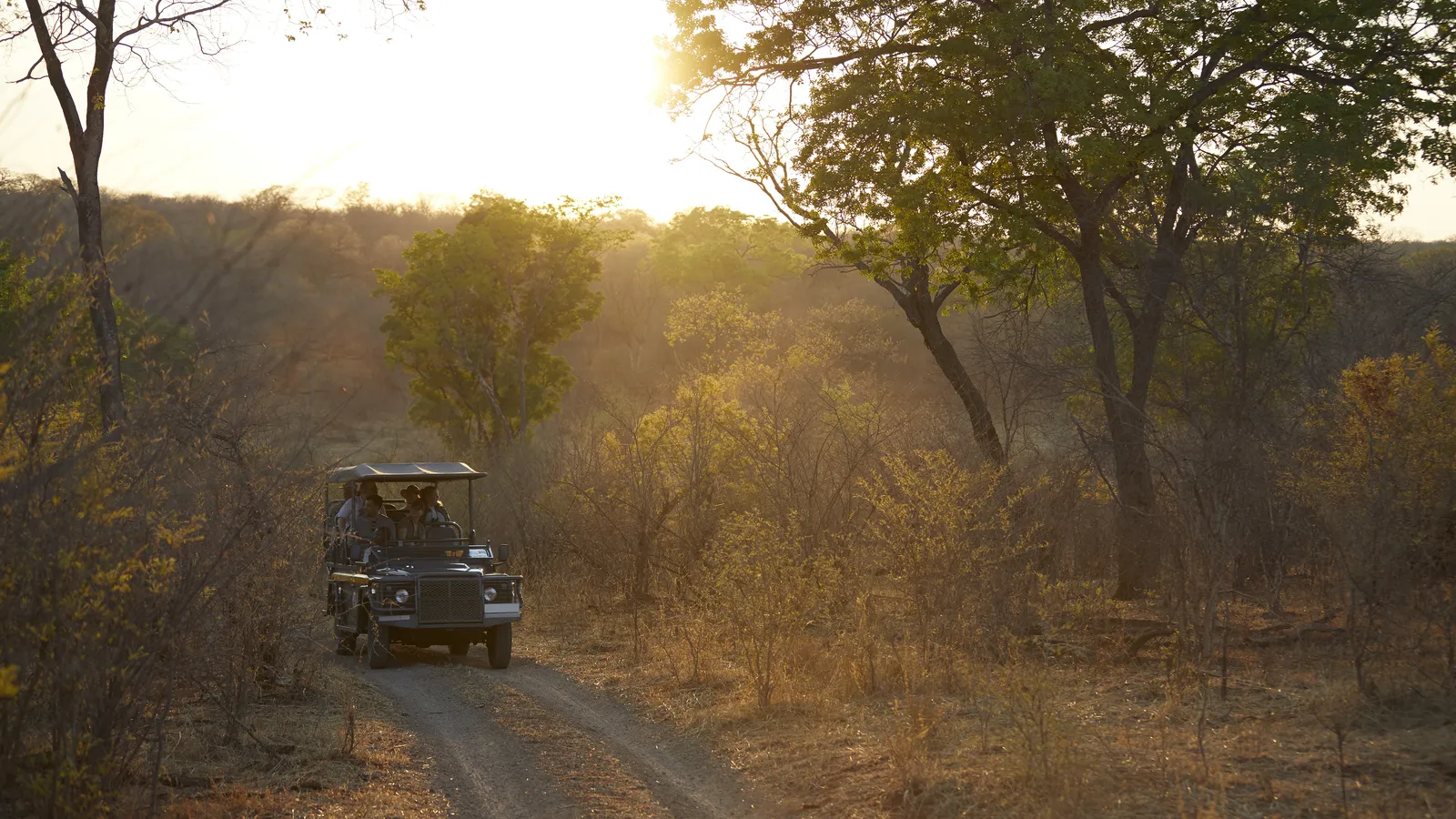
On a booked Pilanesberg day tour the operator picks you up between about 05:30 and 07:00 at your hotel in Johannesburg, Sandton or Pretoria; Biggestleaf Travel, for example, leaves the DaVinci Hotel in Sandton at 06:00 and reaches the park around 09:00. There follows a game drive of around two and a half hours in an open safari vehicle, around midday a break with a light meal, usually at the Pilanesberg Centre overlooking a waterhole, then a second game drive of about two hours. Around 15:45 you head back, arriving in Johannesburg between 18:00 and 18:30 depending on traffic. Some operators drive through the park in the closed minibus, others switch to open vehicles at the gate; that is worth checking before you book. A Kruger day tour starts much earlier, lasts ten to twelve hours and, after nine hours of driving, leaves only a few hours in the park.
Photo: Image-Source, Envato Elements · Stock image
12:00 · Decide
The day tours people actually book.
Sorted by number of reviews, only tours with genuine reviews. Booking via GetYourGuide or Viator through affiliate links (advertising), same price as booking direct. Prices as of 23 September 2026, in US dollars.
25 sourcesChecked on 23 September 2026No cookies, no trackingPilanesberg entry adults, foreign visitors, per day: 748 ZAR
15:45 · Second look
What the web gets wrong.
The Kruger National Park is only three hours from Johannesburg
To the nearest gate, Malelane, it is 392 kilometres and 4 hours 21 minutes of pure driving time via the N12 and N4 according to the route information on krugerpark.co.za, with breaks and traffic more like five hours. The three hours apply at most to the stretch from Johannesburg to Nelspruit.
The Lion Park is a safari
The Lion & Safari Park is a wildlife park in which lions, cheetahs and hyenas live in enclosures and visitors drive through; there are no elephants, rhinos or buffalo. It is a good option for half a day with children, but not a safari in the wild.
There are no lions in Pilanesberg
The North West Parks Board lists healthy populations of lion, leopard, rhino, elephant and buffalo for Pilanesberg; a 2023 survey counted 44 adult lions. Sightings are regular, but not guaranteed.
Pilanesberg costs 110 rand entry
That was the rate for foreign adults until November 2025. Since 1 December 2025 foreign visitors pay 748 ZAR per person per day, plus 168 ZAR per vehicle.
You need malaria prophylaxis around Johannesburg
Gauteng, Pilanesberg and Dinokeng are malaria-free. The risk exists in the north-east of Limpopo and Mpumalanga, including the Kruger National Park.
There are no free-roaming Big Five in Gauteng
The Dinokeng Game Reserve north of Pretoria keeps lion, elephant, buffalo, leopard as well as black and white rhino on around 20,000 hectares and describes itself as the province's only Big Five reserve.
Photo: byrdyak, Envato Elements
15:45 · Drive back
What it costs.
A guided Pilanesberg day tour from Johannesburg costs around 1,800 to 3,400 ZAR per person in 2026 depending on the operator, group size and vehicle; Biggestleaf Travel, for example, charges 3,400 ZAR for international guests including park fees, lunch and two game drives in an open vehicle (valid until 30 November 2026). With some operators the park fee comes on top separately; that should be stated in the offer. For self-drivers, Pilanesberg charges 748 ZAR per foreign adult and 168 ZAR per vehicle, plus a hire car from around 17 to 35 euros per day plus fuel for about 350 to 400 kilometres.
Two people in a hire car thus pay around 1,700 ZAR in park fees plus car and fuel, which is no longer a big saving compared with the group tour. Dinokeng costs considerably less at 200 ZAR per foreign adult and a 250 ZAR self-drive permit. Tips for guide and driver of about 50 to 100 ZAR per person per day are customary.
Official fees and prices
Pilanesberg entry adults, foreign visitors, per day748 ZARAs of 2025-12-01
Pilanesberg vehicle fee car/SUV, per day168 ZARAs of 2025-12-01
Kruger daily conservation fee adults, international (1 Nov 2025 to 31 Oct 2026)602 ZARAs of 2025-11-01
Dinokeng conservation fee day visitors, international adults200 ZARAs of 2026-07-01
Lion & Safari Park self-drive, adults400 ZARAs of 2026-09-23
15:45 · Back through the evening lightPhoto: ADDICTIVE_STOCK, Envato Elements · Stock image
Best time to go
When it is worth it.
The best time for wildlife sightings in Pilanesberg is the dry season from May to September: the vegetation is sparse, the animals gather at the remaining waterholes, and the sky is mostly clear. The nights and early mornings are cold then; in June and July the minimums are close to freezing, which you notice on a drive in an open vehicle. The rainy season lasts from October to March with around 622 millimetres of rain, mostly as afternoon thunderstorms; December to February are the wettest months with daytime values around 25 to 30 °C, and tall grass then makes sightings harder.
The operator of the tour site recommends mid-July to mid-October. The same seasonal logic applies to the Kruger, where the increased malaria risk is added in the rainy season.
Who you might meet
LionLeopardElephantWhite and black rhinoBuffaloRhinoBlack and white rhinoLionswild dogs and leopards in enclosures; giraffesWhite rhinoCheetahGiraffeZebraHippoBlue wildebeestKuduSable antelopeOryx
According to the North West Parks Board, Pilanesberg has healthy populations of lion, leopard, black and white rhino, elephant and buffalo. Dinokeng describes itself as the only Big Five reserve in Gauteng and lists lion, elephant, buffalo, leopard as well as black and white rhino. The Kruger National Park has all of the Big Five but is a malaria area.
Johannesburg, Pretoria, Pilanesberg and Dinokeng are malaria-free; the current South African risk map shows Gauteng and most of North West province as malaria-free. The Kruger National Park, by contrast, lies in an area with a high seasonal malaria risk from September to May according to the German Federal Foreign Office.
Who is it for?
With children
Pilanesberg is well suited to children: a short drive, no malaria, toilets and a restaurant at the Pilanesberg Centre. For children under about six, two game drives totalling four and a half hours in an open vehicle are long; some operators set a minimum age, which is stated in the respective offer. The Lion & Safari Park is the most convenient half day for small children, but no safari experience. A Kruger day tour of more than twelve hours is not recommended for children.
Malaria
No malaria prophylaxis is needed for Pilanesberg, Dinokeng, Rietvlei and the Lion & Safari Park; Gauteng and most of North West province are considered malaria-free. The Kruger National Park lies in the zone with a high seasonal risk from September to May and a medium risk from June to August; the German Federal Foreign Office recommends mosquito protection there and, depending on the season, chemoprophylaxis.
Self-drive
Pilanesberg, Dinokeng and Rietvlei are suitable for self-drivers in an ordinary car; in Pilanesberg the main routes Kubu, Kgabo, Tshwene and Tau are tarred, the remaining roads are gravel. The approach via the N4 and R556 is simple; allow for driving on the left and for driving at night, since the return ends at dusk. If you want to see lions or leopards, you are usually more successful with a guide in an open vehicle, because the guides share sightings by radio.
Limited mobility
Closed tour vehicles and self-drive cars are the best choice for people with limited mobility; open safari vehicles have high steps. The Pilanesberg Centre and the hides are partly step-free; the operator gives no binding information on accessibility, so ask in advance.
What to wear
Muted colours, a sun hat, sunscreen and, in the dry season from May to September, a warm jacket, beanie and blanket for the early game drive in an open vehicle, because in the morning temperatures are then often only around 5 °C. In the rainy season from October to March, a light rain jacket for the afternoon thunderstorms.
Photography
A telephoto lens from 200 to 300 millimetres is enough for most sightings; the animals in Pilanesberg are used to vehicles. The best light is in the first and last hours of the gate opening times; day tours, however, usually only reach the park around 09:00. Time is well spent at Mankwe Dam and at the hides. Drones are expressly prohibited in Rietvlei and are not allowed in the other reserves either.
Budget
The cheapest Big Five option from Johannesburg is Dinokeng as a self-driver, at 200 ZAR per foreign adult plus 250 ZAR per vehicle. Pilanesberg has become expensive since December 2025 at 748 ZAR per foreign adult, but the wildlife density is higher. A group tour from around 1,800 to 3,400 ZAR including fees is usually cheaper for solo travellers and couples than a hire car plus fees.
Tips for the day
01Book a Pilanesberg tour with game drives in an open safari vehicle and not only in a closed minibus; the view and the photos are considerably better.
02The park fee of 748 ZAR per foreign adult is not included in the tour price with some operators. Check this before you book, otherwise the tour gets noticeably more expensive at the gate.
03Take your passport. In Pilanesberg the fees are tiered by nationality, in the Kruger likewise, and it is checked at the gate.
04In the dry season from May to September you need a jacket, beanie and blanket in the open vehicle in the morning; most operators carry blankets, but not all.
05If you want to see the Kruger, plan at least one overnight stay in or beside the park and fly from Johannesburg or leave early. The day trip from Johannesburg means nine hours of driving for two to three hours of park in the midday heat.
06For self-drivers in Pilanesberg, the Bakubung or Kwa Maritane gate in the south is worthwhile; from there Mankwe Dam with its hide is easy to reach and the main routes are tarred.
07Dinokeng is a cheap alternative as a self-drive day from Pretoria; buy the conservation fee and self-drive permit online in advance, as the gates are cashless.
08Plan the return so that you are back on the motorway before dark; the R556 is a country road with livestock and pedestrians at the roadside.
18:00 · Back
Frequently asked questions.
Kruger or Pilanesberg from Johannesburg?
For one day, Pilanesberg is the clear choice: two to two and a half hours' drive, all of the Big Five, no malaria. The Kruger is almost 400 kilometres away, the day tour takes more than twelve hours and leaves only a few hours in the park. If you absolutely want to go to the Kruger, plan at least one night there.
How much does a safari from Johannesburg cost?
A guided Pilanesberg day tour costs around 1,800 to 3,400 ZAR per person in 2026, depending on the operator with or without park fees of 748 ZAR per foreign adult. As a self-driver you pay 748 ZAR per person plus 168 ZAR per vehicle in Pilanesberg, and 200 ZAR per person plus a 250 ZAR permit in Dinokeng.
Can I drive to Pilanesberg myself?
Yes, the park is suitable for self-drivers in an ordinary car; the main routes are tarred. The approach via the N4 and R556 takes a good two hours. Without a guide, predator sightings are less likely, because guides share sightings by radio.
Will I see all of the Big Five in one day?
No, nobody should count on that. Elephants and white rhinos are seen frequently in Pilanesberg, buffalo and black rhinos less often, lions regularly but not for certain, leopards rarely. Two game drives with a guide raise the chances considerably.
Is a safari from Johannesburg sensible with children?
Yes, Pilanesberg is malaria-free, the drive is short and there are toilets and a restaurant in the park. Some operators have a minimum age for open vehicles. For very small children the Lion & Safari Park is more convenient, but no safari experience.
Do I need malaria prophylaxis?
Not for Pilanesberg, Dinokeng, Rietvlei and Johannesburg. The Kruger National Park is a malaria area with a high risk from September to May; there the German Federal Foreign Office recommends mosquito protection and, depending on the season, medication.
When is the best time for a safari from Johannesburg?
May to September is the dry season with sparse vegetation and good sightings, but cold mornings. October to March is warm with afternoon thunderstorms and tall grass. Over the course of the day, the early morning hours and the late afternoon are the most rewarding.
How long does a Pilanesberg day tour take?
Door to door about twelve hours: pickup between 05:30 and 07:00, two game drives totalling around four and a half hours, a lunch break, return between 18:00 and 18:30.
Is Dinokeng an alternative to Pilanesberg?
As a cheap self-drive day from Pretoria, yes: an hour's drive, the Big Five present, 200 ZAR per foreign adult plus 250 ZAR per vehicle. The wildlife density is lower than in Pilanesberg and sightings of the big animals are less certain.
What is the difference between the Lion Park and Pilanesberg?
The Lion & Safari Park is a wildlife park 45 minutes from Johannesburg in which predators live in enclosures; Pilanesberg is a fenced but 550 square kilometre park in which the animals live and hunt freely. If you want a safari, go to Pilanesberg.